
Published: 03/19/2026
By Catherine Wu, Global Health Communications Assistant
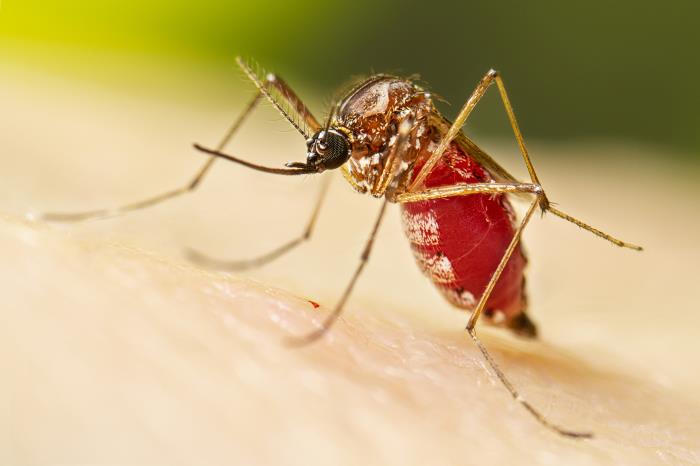
Mosquito-borne diseases present a significant global health crisis, causing over 650,000 deaths annually. Among the most rapidly spreading mosquito-borne diseases is the dengue disease, transmitted primarily by Aedes aegypti and Ae. albopictus. In 2023, the disease was responsible for five million reported cases and 5,000 associated deaths from hemorrhagic complications. Across mosquito-borne diseases, rising temperatures and increased precipitation have been shown to exacerbate rates of mosquito breeding and disease transmission.
As climate change leads to extreme weather events, understanding their role in disease outbreaks has become increasingly urgent. A recent publication in One Earth, supported by a Stanford Global Health Seed Grant, demonstrated that the extreme precipitation during Cyclone Yaku in northwestern Peru in March 2023 fueled the record-breaking dengue outbreak in the region. Specifically, researchers attributed 60% of the cases (or 22,014 cases) in the affected districts to extreme precipitation. Furthermore, dengue cases were 31% more likely to occur in warm, urban, flood-susceptible districts, and 189% more likely in warm temperatures alone.
These findings underscore the importance of investigating links between climate change and infectious disease outbreaks, in an effort to better anticipate and prepare for future health risks.
The publication was co-authored by CIGH faculty fellow Erin Mordecai along with other Stanford researchers and collaborators from Peru and Ecuador.
Read the full story here.